Stories of local History & Historical sites

Read some of our fascinating stories

Kill Ancient history

The area around Kill has been settled from the very earliest times.

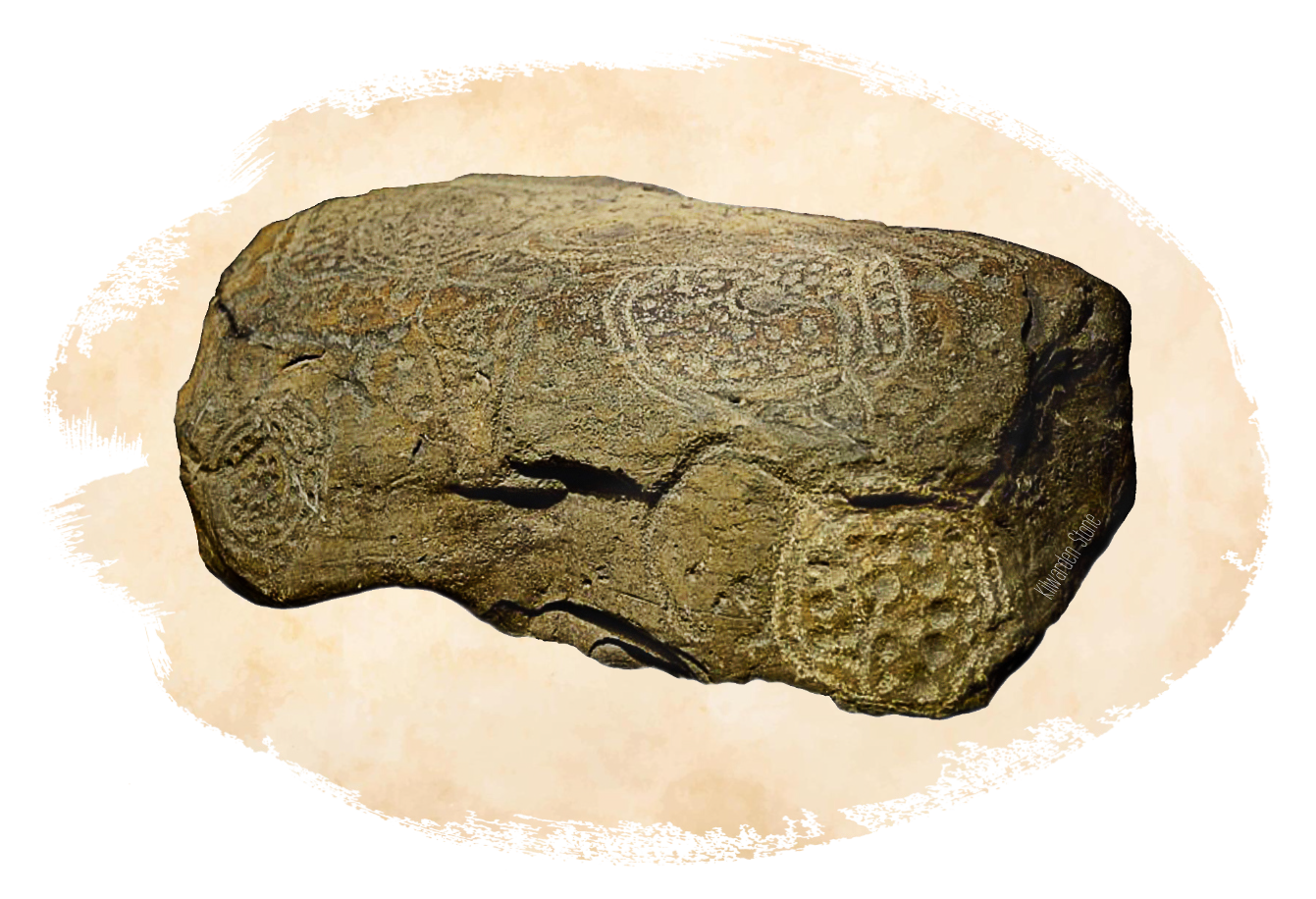
Evidence of this can be found in the inscribed stones which have been found in the locality and whose rock art has been dated to the neolithic or Stone Age period.
The most famous of these [The ‘Kilwarden’ Stone] is held in the National Museum.

Kill History from 12th century

Kill was passed between various Norman families in the 12-13th centuries. It was the scene of action during the Confederate wars in the 1600's, and many Kill men were involved in 1798 rebellion. In the 19th century the famous John Devoy was born there.


Johnstown History

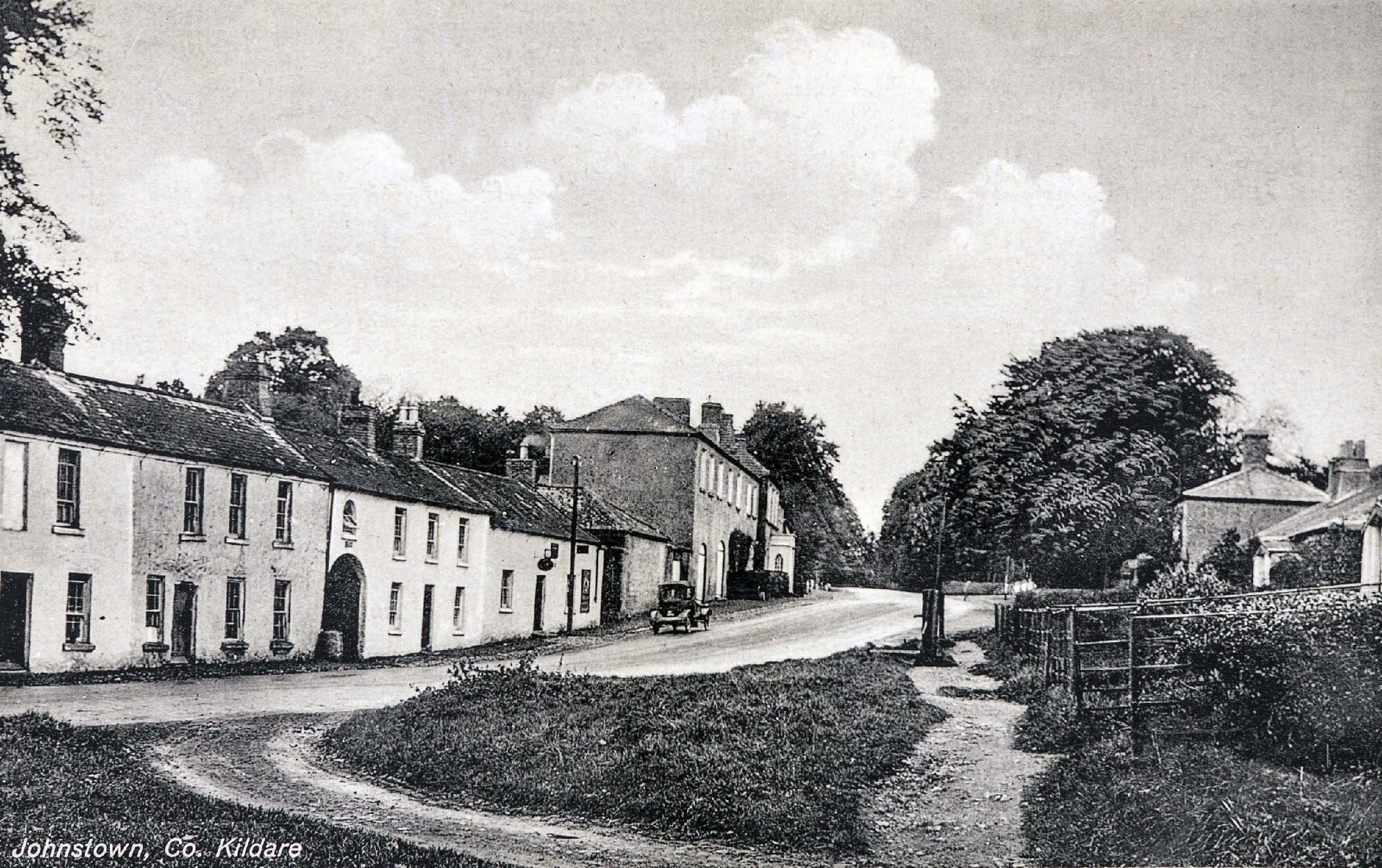
Johnstown's ancient history is exempified by an astronomically aligned stone. The ruined church in the village is likely on the site of one built by the Knights Hospitaller order, and there are medieval remains and a 15th century grave slab. Later the village was owned by the Earls of Mayo who lived at nearby Palmerstown

St. Brigid's church

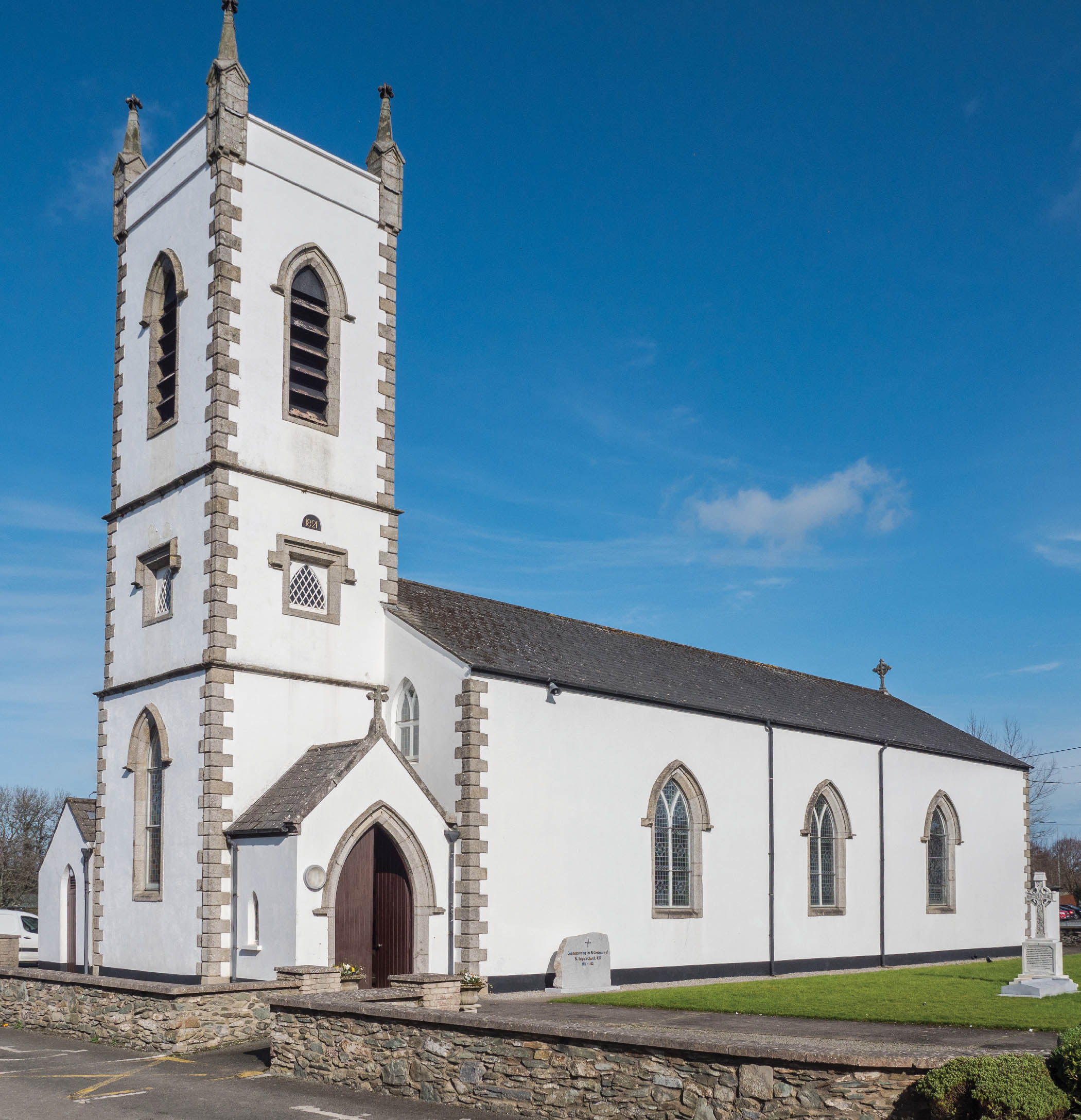
Built in 1821, the church remains in use today and retains many original features

Kill Moat

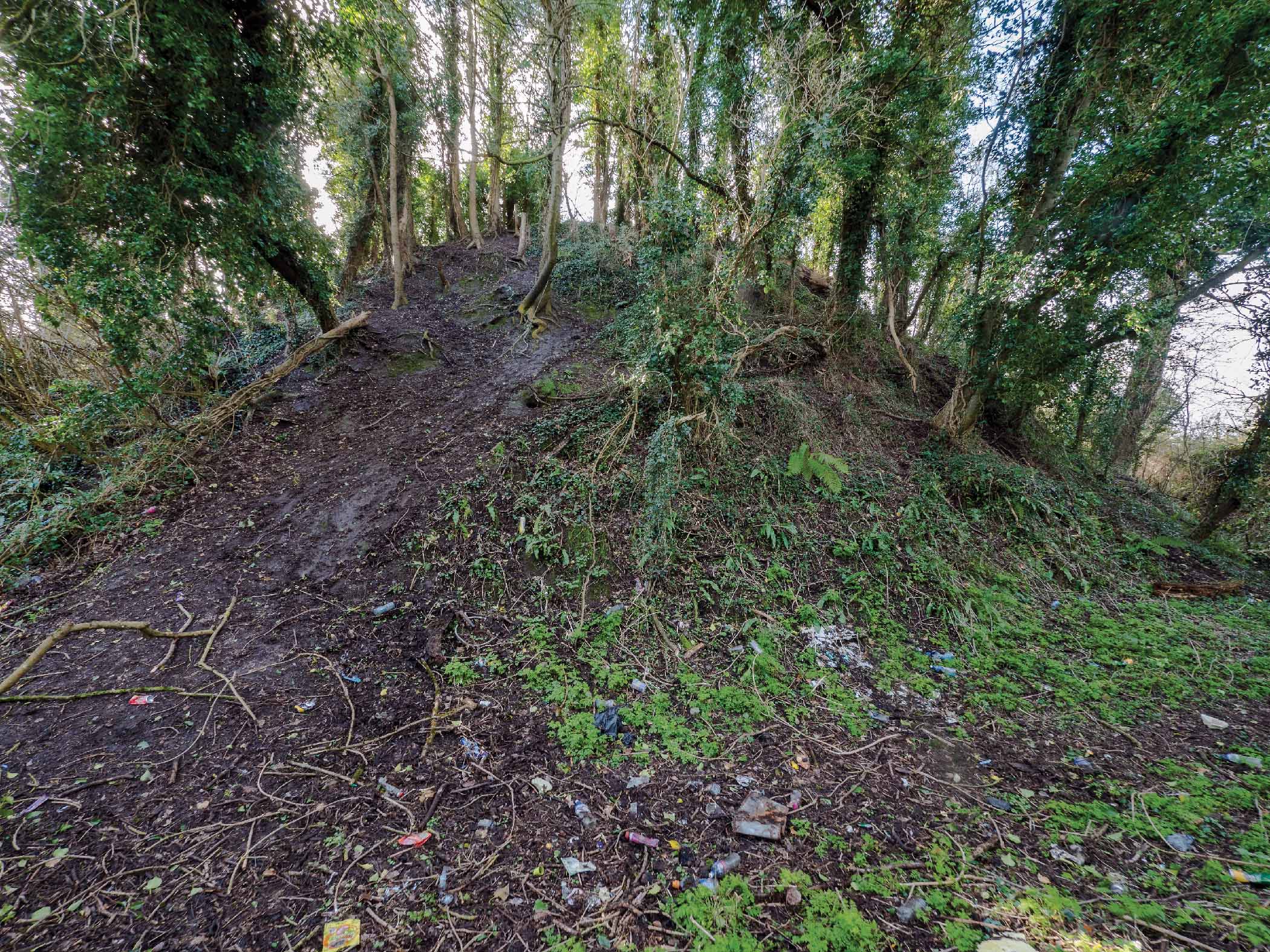
This is a tree covered mound situated near the village centre which is believed to date back to the 12th or 13th century.

St John's Church

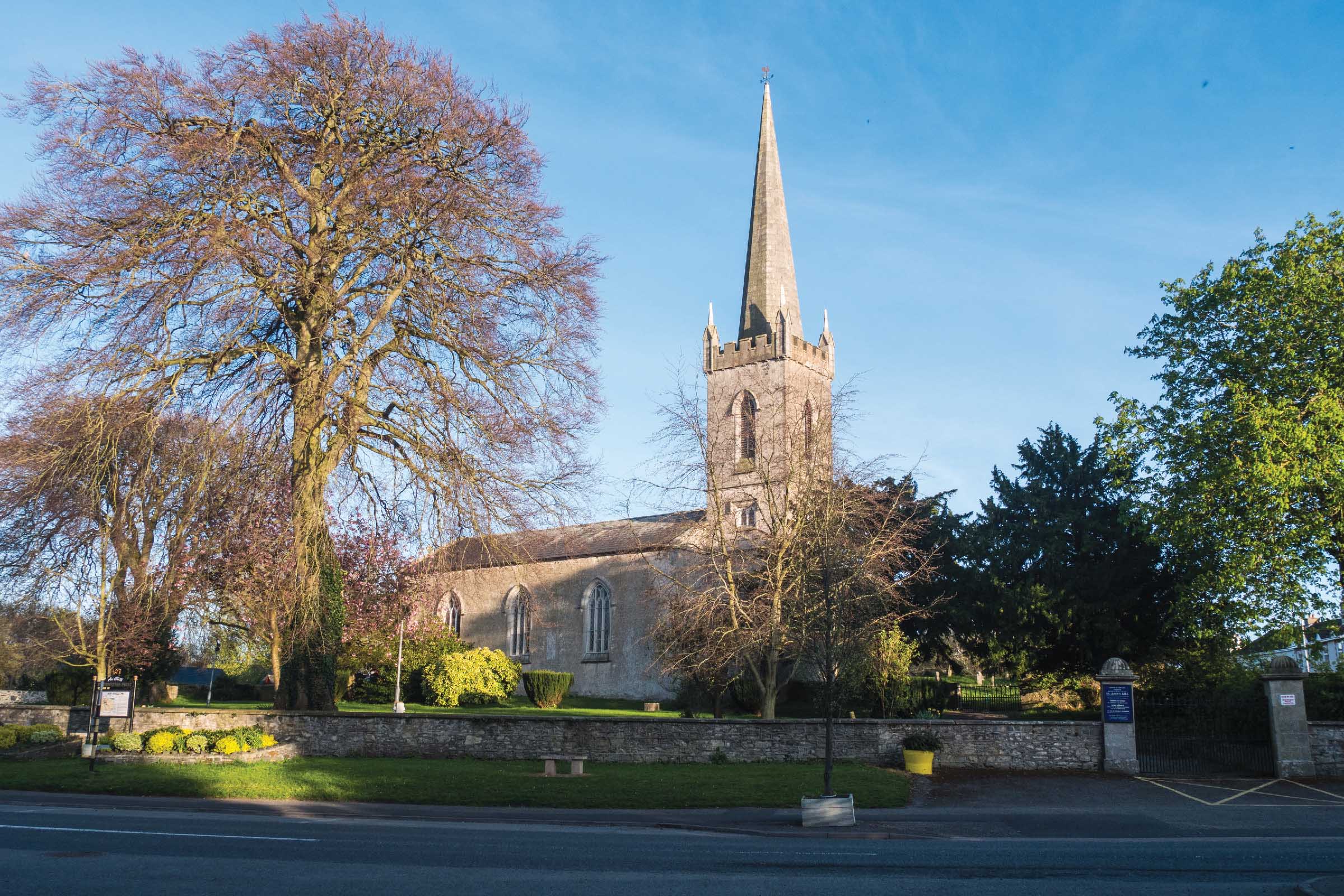
The current Church of Ireland church dates from the 1820's, but there has been a church here for many centuries

© Copyright WYSIWYG Web Builder

Full text History Stories

Kill Ancient History
The area around Kill has been settled from the very earliest times.

Evidence of this can be found in the inscribed stones which have been found in the locality and whose rock art has been dated to the neolithic or Stone Age period.
The most famous of these [The ‘Kilwarden’ Stone] is held in the National Museum.

The ancient [fragmentary] annals refer to the burial of nine kings of Leinster in “Cill Corbain” where their “war-like graves are made” and tradition locally has always held that this refers to Kill and, specifically, to the moat area south east of the village.

The name of the village itself denotes that there must have been a church (cell or cill) here from the earliest Christian period and it is likely that the present St John’s church stands on the site. The original dedication of the church seems to have been to St Brigid but this was changed when the area was taken over by the Normans in the 12th century.
Kill History from 12th century
Kill formed part of the ‘cantred of Offelan’ granted by Strongbow to Adam de Hereford in the sub-division of Leinster. Adam granted it to his brother John who was, in turn, succeeded by his son Thomas. Thomas had no sons so the land passed to Milo de Rochford who had married his daughter Eleanora. The manor remained in that family until the mid 13 century and thereafter seems to have passed to St Thomas’ Abbey in Dublin, who held it until the Dissolution of the Monasteries under Henry VIII.

After the Dissolution in the 1540s the manor was leased to Thomas Alen, brother of Sir John Alen, Lord Chancellor of Ireland. In 1551 it passed to Richard Aylmer and there is evidence of the existence of a borough at Kill in the early 1600s.

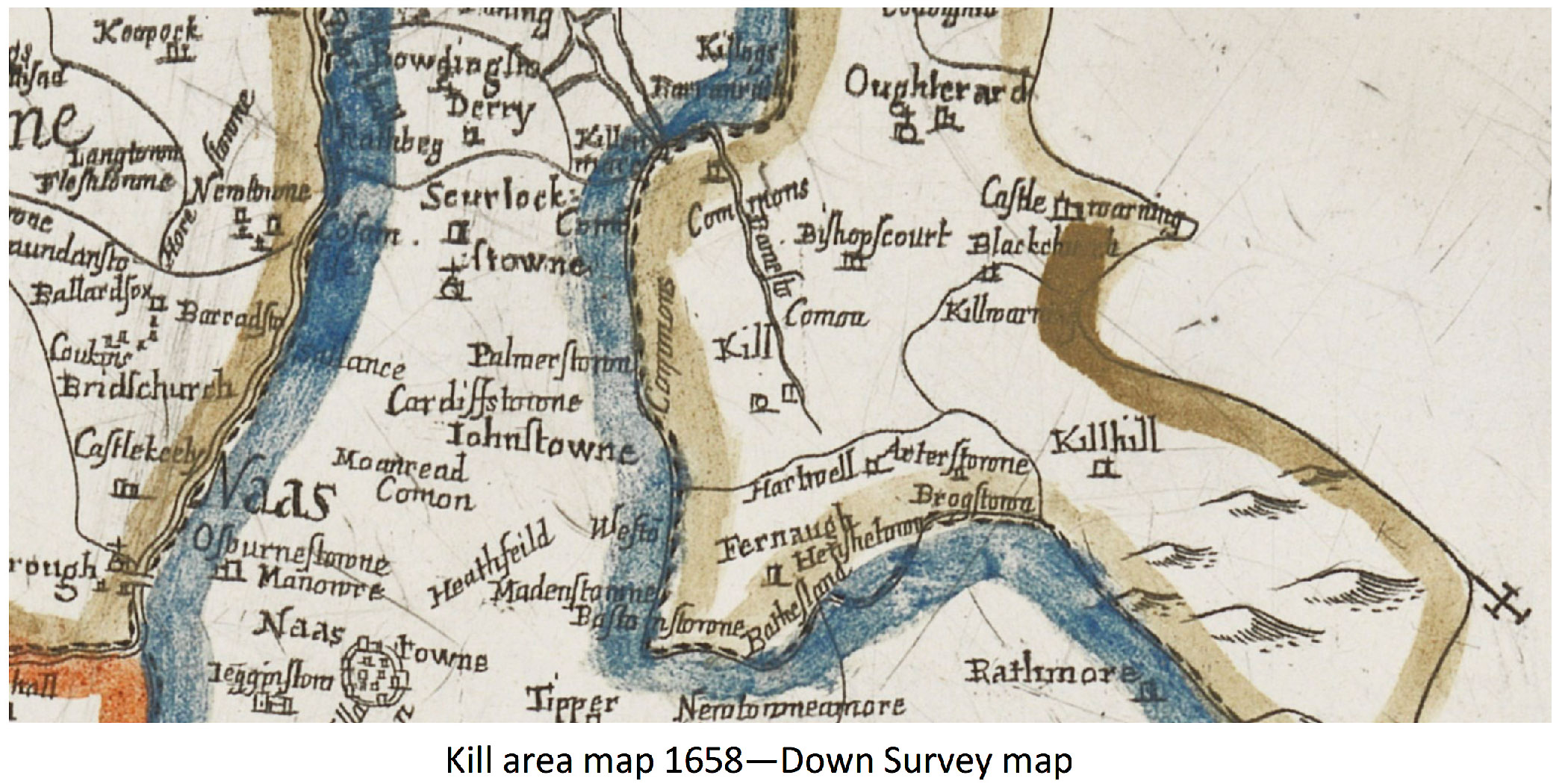
Kill was the scene of much action in the Confederate or Cromwellian Wars in the 1650s and Hartwell castle was used as a headquarters by the Royalist commander, the Duke of Ormonde at the time. Kill was also the scene of action - and many men from the area were involved in the fighting - during the 1798 Rebellion, as well as the later, abortive, “Robert Emmet” Rising in 1803.

During the 19th century the local landlords were the Bourke family, based at Palmerstown, one of whom [Richard Southwell] became Chief Secretary for Ireland in the 1860s and, ultimately, Viceroy of India where he was assassinated. Another famous Kill man was the Fenian John Devoy (1842-1928) who played a crucial role in advancing the Irish cause in America and, finally, in achieving political independence for Ireland.


Johnstown History
Evidence of human activity around the area in the earliest times can be found from the ‘holed’ stone standing in a field at the southern end of the village. This stone has now been found to be astronomically aligned to the mid-summer solistice.

The village at Johnstown probably grew up between the river, where there was an early ford, and the site of the old church, which was founded by the medieval order of the Knights Hospitallers of St John of Jerusalem - whose regional headquarters [Commandery] was at nearby Kilteel, and who had an abbey in Naas.

During the Middle Ages, Johnstown was associated with the Flatsbury family, whose name first crops up in Kildare in the 13th century. The family were an influential one - with members being appointed as Collectors of the Kings Revenue and acting as Sherriffs of Kildare, and even members of Parliament, between the 14th and 16th centuries.

The old graveyard at Johnstown contains a number of fragments, including the octagonal base of a medieval baptismal font, and a flat stone slab with carved coats of arms representing the Wogan and Flatsbury families. This has been taken to be the grave slab of James Flatsbury who married Eleanor Wogan in 1436.

Another famous member of the family was Philip Flatsbury, a scholar and scribe who compiled, in 1503, “The Red Book of Kildare” for Garret ‘Og’ Fitzgerald, the 9th Earl of Kildare. This book, which contains lists of documents relating to the Fitzgerald estates (including grants and title deeds) went missing after the Rebellion of ‘Silken Thomas’ the 10th Earl, but is today in the possession of Trinity College Dublin.

After the Rebellion of 1641 the lands around Johnstown and Palmerstown were confiscated from the Flatsburys and granted to a west of Ireland family called Bourke who went on to become part of the British establishment, acquiring the titles of Lord Naas and, ultimately, Earl of Mayo. The family held many Crown offices with, perhaps, its most famous member being the 6th Earl, Richard Southwell Bourke who was appointed Chief Secretary of Ireland on three occasions in the 1860s and, finally, Viceroy of India, where he was assassinated in 1872. He is buried, under a celtic cross, in the centre of the old graveyard in the village.
St. Brigid's Church
St. Brigid's Roman Catholic Church is situated at the northern end of Kill village and was built in 1821. Its notable features are the tower, with its raised coigns and pinnacles, and the dressings around the windows, which are all made of Wicklow granite.

The church was greatly extended and renovated in the 1970's with the addition of a new wing to the rear and the re-roofing of the old building. The new wing is most unusual in that it incorporates a curtained stage at one end, and reversible seating which can be turned either to face the altar, when the building is in use as a church, or to face the stage when the wing is partitioned off and it becomes a self contained hall.
Kill Moat
Situated south east of the village of Kill, beside a modern housing estate, lies the, 'Moat' of Kill, which consists of a tree covered mound, enclosed by a ditch with a slight counterscarp bank, and a bailey on the north-western side. The Kill river flows through the ditch on the south west side. The motte itself is a round conical mound 12 metres high with extensive views on all sides except the east, where it is overlooked by the historic Kill Hill, where recent excavations have uncovered evidence of Neolithic and Bronze Age activity.
The motte was probably erected in the late 12th or early 13th century by the de Hereford family, who were granted this land after the Norman invasion. There are few records of its history but, at the Dissolution in the 1540's, it is described as "a small mountain surrounded by a dry ditch on which the capital of the manor was situated and where the Court Baron is still held".
Local tradition also attributes it with being the burial place of the Kings (or Queens) of Leinster. This may point to it being a much earlier burial mound, re-used as a
Norman fortified site, of which there is at least one other example in the locality.
St. John's Church
The village of Kill probably got its name from an early Christian church ( 'Cill' or 'Cell') which most likely stood on the site of the current St Johns Church of Ireland in the centre of the village. The slight curve in the street here may reflect the line of the earlier enclosure.
There seems to have been a church here since pre Norman times after which, in the 1200s, it was granted to St Thomas' Abbey in Dublin. The present church dates from the 1820s and contains many interesting features. For example, it still has its original half door and, up until the 1980s, still had not had electricity installed, which made for very atmospheric (ecumenical) carol services every Christmas. It also has a very unusual organ, on which the colours of black and white keys are reversed; it was reputedly a gift from the wife of the local landlord, Lady Mayo, in the 19th century.